This one will be very niche and specific, as opposed to my usual very general generic, easily applicable topics. But it does shed light into some parts that we would love to revisit from our childhood, only to realise that the experience will never be the same again.
So strap in to learn more about the exciting world of trading card games.
What is a Trading Card Game?
Not all of you may be familiar, even though you’ve definitely encountered them in your childhood. A trading card game (TCG), or collectible card game (CCG), is a type of competitive card game where your collection grows by buying small packs of random cards, with card varying in their degree of rarity and strength. The trading aspect comes naturally from the fact that the demand for some cards has uneven supply, allowing players that are lucky and pull strong rare cards to trade them away to other players.
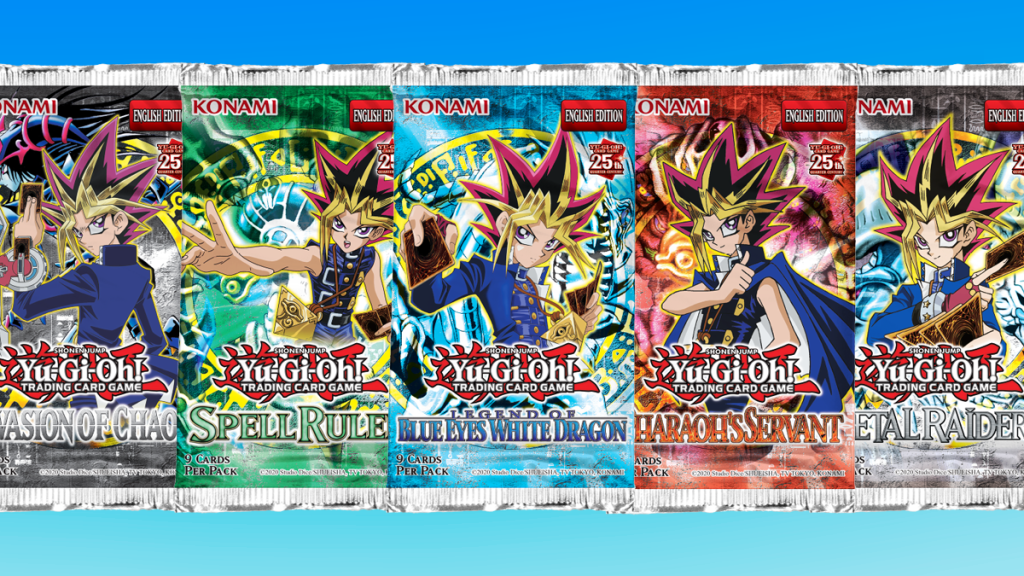
If you were born around the 90s, you’ll likely have heard, encountered or played Yu-Gi-Oh and Duel Masters. You must have heard at some point of Magic-the-Gathering or Disney’s Lorecana, but if you’re up to date with the current news, you will have heard of Riftbound, and the mess it is.
And about this mess we will speak, of course, but first, a little dive into a time of delightful innocence, and let us think about it together.
Learning to play in Childhood
I hope some aspects here will resonate with you, but if they don’t, it’s ok. All of us have different childhoods, and to be fair, not even I remember much of it.
I’ve never heard of the term TCG before, not sure if it was because it wasn’t coined at the time, or because I didn’t live in an english speaking country, but I did play them. Or one, called Duel Masters. There was even a cartoon I was watching with the same name, and the same cards, so being able to get the cards that I would see my favourite characters play with, it was an experience, let me tell you.
I also had friends who would play, and had their own collections, so in class, or on the side-walk in front of our homes, we would get our unsleeved cards and play. But badly, I remember neither of us were bothered with the mana system. We would just get very happy to play the most obnoxiously strong cards we would find in the top deck, and laugh at the damage.
I have no memory of the win conditions, I knew nothing about what cards were more rare than the others. But if my friends had some cards I wanted, and I had some cards they wanted, and we had duplicates, of course we’d change them. No money, no equivalence. You have it, I don’t, we don’t know, we don’t care, we just exchange. Sometimes one for one, sometimes one for many. Who cared, if you had plenty?
But one day, something happened. I still remember a friend of mine coming to me with a card he glued some hand-drawn paper on, and said “this card is the strongest card in the game, but it’s so rare, I had to draw it”. I was confused, but I didn’t think of it much, other than “uh, he’s gonna stomp, he’s got a super strong card”. But he only had it once in the deck, so I liked my odds still.
Also, neither of us would bother with “deck size limits” or anything of the sorts. All our card collection? That was our deck. If we had plenty, we’d give half of our collection to a friend, so they could play against us. It was magic, it was fun, it was adorable.
And everyone who’s ever gone through it, probably has a part of them now that is missing that experience. That is hoping to return, play again, but now with the knowledge and wisdom of playing good strategies, of truly appreciating cards for their rarity and impact, and maybe play competitively.
But I’m afraid I finally understood why “the tree of the knowledge of good and evil” is the original sin. With this level knowledge and awareness, there comes a price. A hefty price indeed.
Collecting in adulthood: it’s not about play anymore
Ever since I learned of Magic The Gathering, I wanted to get myself into a trading card game casually. As in, I wanted to be able to have a relatively complete collection, but in order to be efficient about it, I had to join the hobby from the start. That is why, when I learned that one of my favourite IPs would make a physical version of the TCG genre, called “Riftbound”, with the characters from the lore created by the company behind “League of Legends”, I thought I’d be up for a treat.
Little did I know how wrong I was.
My plan was the following: I’d get the starter box, which was very reasonably priced (~$25), that contained 4 decks I could play with my friends, in a very boardgame-like style, as in, if I wanted to play in 3 or 4, it would be possible (I love board games btw). Maybe the preconstructed decks, which were 3, about $10 each (or was it lower, I can’t remember). Then, I’d buy one or two small packs every week, just to slowly boost my collection in a fun way. Maybe trade a few cards here and there, to get the cards I don’t have.
You can see one of the problems here already: I think in terms of money. I am seeing the experience as a value optimisation problem, not a “yeah let’s play, fun times”.
And one of the reasons this was the case is because, among all my friends, I managed to convince no people close to me to join me into my madness. So I was collecting alone. If you’d like a deeper dive into the topic of the importance of community and culture for performance and purpose, check an old post of mine here.
Anyway, so the only way I could have fun was through collecting and playing with strangers in tournaments at my local game store.
But my plans of collecting have been thwarted by the scum of this Earth: scalpers.
Anyway, good enough of an introduction, let’s move into structured speech:
Value in scarcity, and how it’s exploited
Do you remember how my collection used to work in childhood? How whatever cards that were more rare or less rare, we wouldn’t care about it so much, we’d care if other player had duplicates, and the other didn’t have any, so we’d trade?
Yes, that aspect is lost completely now.
You barely trade anything anymore in terms of card exchange, unless they’re commons (and not even all commons benefit form this). Whatever you’re trading, you need to check PriceCharting or other websites, to check how much the card is worth, to see if they’re equivalent for exchange. But more often than not, you’d just pay for them in actual real life money. Everyone I’ve spoken with from the game store had a PayPal account specifically for this, or some way to pay directly with your phone. Exchanging a rare for a common? Are you out of your mind? Maybe 100 commons for a rare, and not even then, everyone would rather you pay for them.
Money has become very important, and the more rare something is, the more valuable it is.
It has become quite apparent that the manufacturers of TCGs in general, not only Riftbound, intentionally limit the supply of their stock in order to prevent the devaluation of their product. Magic the Gathering went further than that, with the creation of a list of cards that will never be printed again! The few hundred/thousand copies that exist? Those are the only ones. If I was playing as a kid, and I had one of those cards, I might’ve used it as a coaster, yet the card is worth literally tens of thousands of dollars now! Some people, just through selling one of those cards, could increase their yearly salary by a significant amount.
And unfortunately, people started to notice. And they have decided to take advantage of it, in a way that, at this point in time, I can only describe as degenerate.
Professional scalping: how internet destroyed the value of trading
Do you know those people whose only job is to buy stuff online, and then sell it at a higher price? Who create algorithms to do this for them, in order to exploit a system that allows you to perform this action almost instantaneously, without lifting a finger even, and the only way you earn money is by making people that need the stuff you buy less happy, because they need to pay more for it? So your source or revenue is other people’s suffering?
And no, I’m not talking about financial brokers and algorithmic traders, those will be a topic for another post. They are similar, yes, but arguably worse, because the people made to suffer most are children.
They are known as sc*lpers, and their job is two-fold:
- Buy all the stock of a TCG first;
- Sell it at a higher price than was intended.
The first step is the most important, because it creates the scarcity economists are always talking about when it comes to value creation.
Because they exist, and they are so many, it’s virtually impossible to buy your own copies of the decks and cards from a store, unless the physical store involves itself in the limiting of supplies.
But the main reason this problem exists is because of what is happening online. People cannot order anymore, because all preorders are stolen by those people in the very first second they are launched.
They have become professional and oganised, and now have systems and code in place to buy everything faster than any one person can click.
So do you remember how my plan was to get that starter pack with 4 decks for $25? I never saw it in store, in person or online, ever, and now I look online for the price: it’s almost $200.
It’s disgusting, and it’s sad. But this is why the internet, in this day and age, prevents us from feeling what we used to feel when collecting and playing card games: the value of everything is so important that people try to increase the value in any way that they can, in order to make profit.
Proxying, and why it’s not enough to escape
An aspect that I’ve finally considered when it comes to playing card games is to proxy cards that I don’t have.
What is proxying though? It’s the process of using a placeholder, like a different card, or printed image, or anything, in order to represent something else.
Professional competitive players use proxying in order to test the value of a specific card they do not own before they buy it for competitions. But here’s the thing: they have a small strong group of people that they play against, a team, that both collects and proxies, in order for all of them to become competitive.
I’ve started considering going for a full set of proxied cards, professionally printed, so that I don’t have to deal with the overvaluation and stress of everything. But then, here’s the catch.
I cannot participate in tournaments anymore.
Most LCGs, for official tournaments, they don’t allow proxies. And why would they? If you use proxies, it means you’re not buying product from them, which doesn’t earn them any money.
So the value in the real cards gets increased by the fact that you cannot really play proxies, not even in casual tournaments. Many people who play frown upon the concept of proxying, for good reason: they are struggling with the cards they have, or paying for the cards they need, and the people using proxies don’t.
The fact that proxies are even a topic to be discussed highlights another lost childhood aspect: you optimise the value of your collection. If you value “gameplay” over “usability”, it is a tradeoff you’ve never had to even consider in the past.
Conclusion: there is no turning back
You are now an adult, that pays money for things. You live in an age where the internet and automation exists, so you compete against robots for the right to buy cards at the price the manufacturers considered for the game. You know that it is a game, not your life, so you don’t want to overspend. Most of your friends don’t know what you’re talking about with TCGs and other stuff, so they don’t really care about your fun times or struggles.
So I’m afraid the only part of your childhood that is left when it comes to trading card games will be the memories. Do yourself a favour: don’t spoil your memories of the good times with memories of the current reality surrounding the trading card game market.
You are probably in denial. You cling to it. But it is an addiction that doesn’t help any other aspect of your life. One day you will see, and you will let it go.
 I think I know a lot about many things
Leave a comment